
Can a Plasma Pen Remove Skin Tags, Age Spots or Moles? What to Know Before You Book
Small, harmless skin tags may be treatable with a plasma pen, but moles and changing spots need a medical check first. Know before you book.
15 min read
Medically reviewed by Lynda Quesnel, NP, on November 24, 2026.
Plasma pen skin tag removal may work for small, harmless skin tags and some surface spots. A qualified clinician has to confirm what the spot is first. Moles and dark spots that are new, changing or irregular need a medical check before any cosmetic treatment.
TL;DR
A plasma pen may remove some small skin tags and surface spots after a proper assessment.
New, changing, bleeding, painful or irregular spots need a medical check first.
Health Canada says certain plasma pens are authorized for use by healthcare professionals only (May 2022 update).
Healing usually means redness, swelling and small crusts for several days. Don't pick them, and keep the area out of the sun.
Cost depends on the spot, the area and the number of sessions. A consultation sets the real plan.
Quick question: would you let a gadget from the internet burn a spot off your neck before anyone checked what that spot is?
Me neither. Here is why.
Allure Medical Aesthetics has served Southampton, Saugeen Shores, Port Elgin and the Bruce Peninsula since 2016. It is owned by a nurse practitioner, and every plasma treatment starts with a skin assessment rather than a quick sale.
That order matters more for spot removal than for almost anything else on the menu.
What Is a Plasma Pen?
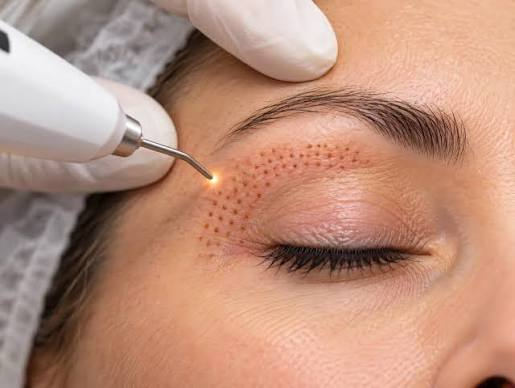
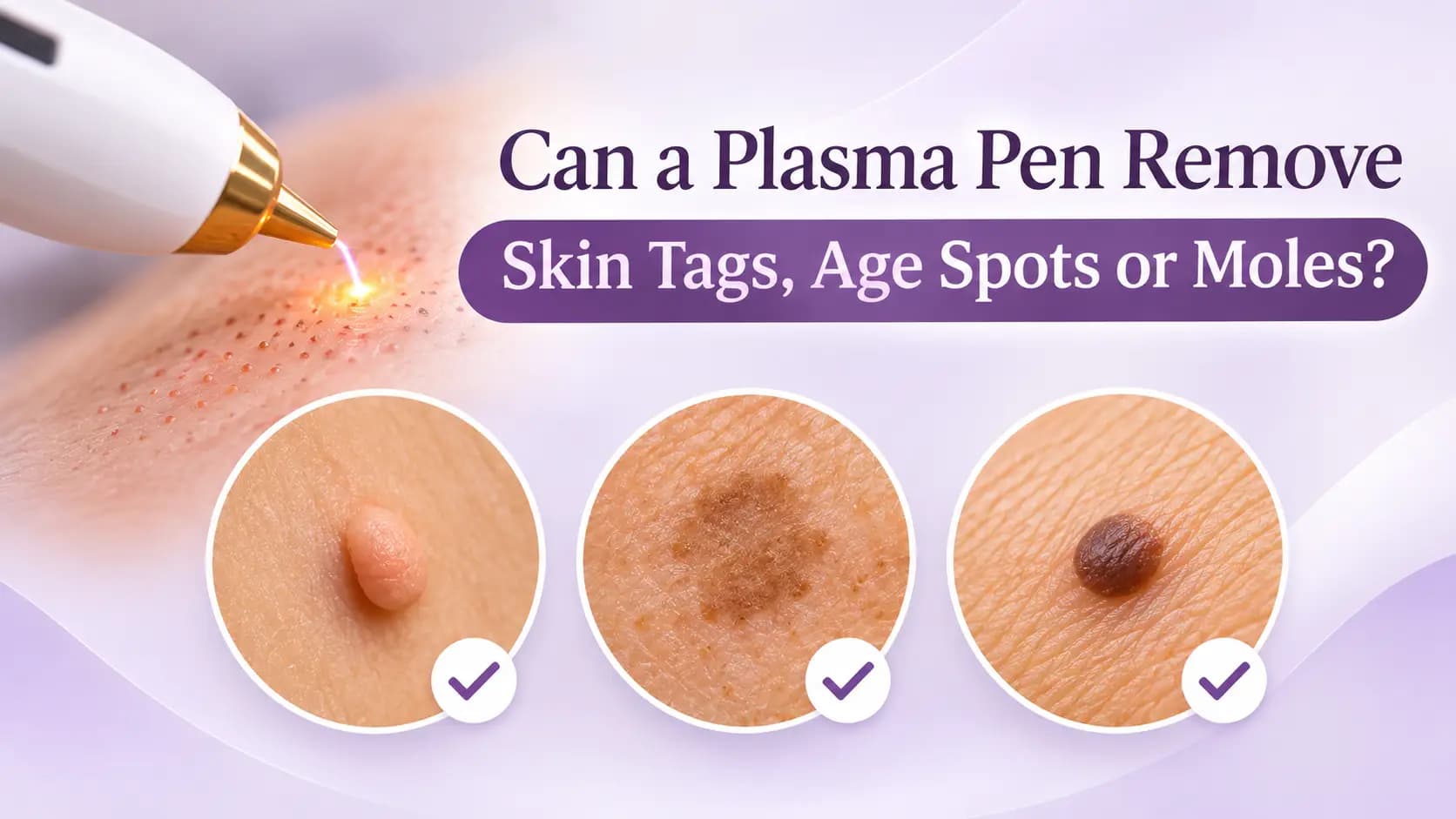
A plasma pen is a handheld device that heats tiny points on the surface of the skin to treat a small area without cutting it. Health Canada describes plasma pens as devices that focus electricity on the skin surface to create a controlled burn. You may also see the treatment called "plasma soft surgery" or "fibroblast" treatment.
How It Works
The pen makes a tiny electrical arc between its tip and the skin. That arc heats a pinpoint of tissue.
Small treatment points = controlled heat on the surface only
No cut = no stitches
Tiny carbon crusts form = a normal part of healing
On a skin tag, the heat goes into the tag itself so the tissue dries out and falls off. For skin tightening, the points are spread in a pattern across the skin instead.
You can see how Allure's clinical team uses this technology on the PlexR plasma pen treatment page.
Is a Plasma Pen a Laser?
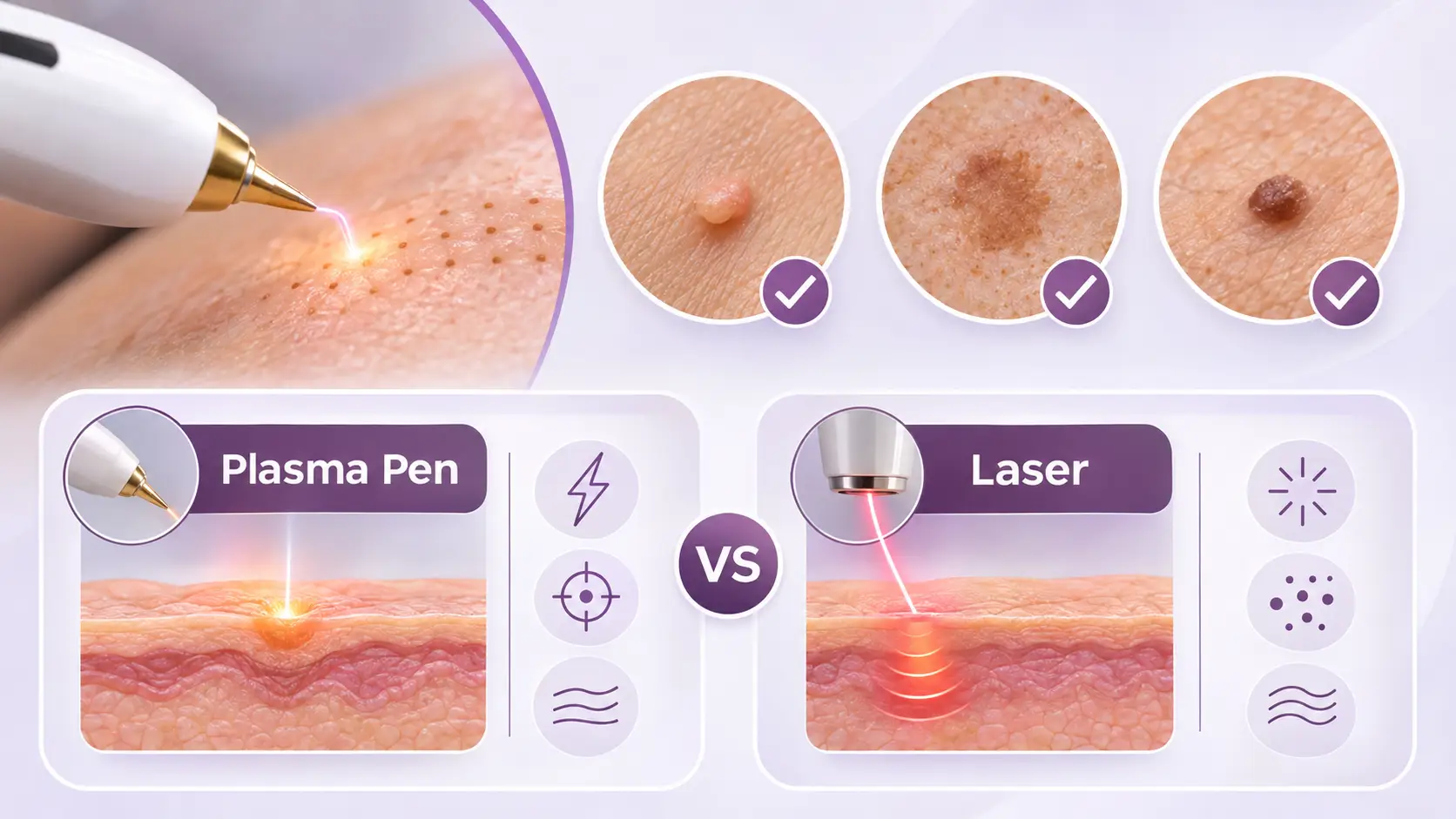
No. A plasma pen uses an electrical arc, and a laser uses focused light. People mix them up because many products online are labelled "laser pen" or "laser plasma pen." That label is usually marketing. It doesn't tell you what is inside.
Energy source: a plasma pen uses an electrical arc (plasma); a medical laser uses light at a set wavelength.
What it does: a plasma pen heats a pinpoint on the surface; a medical laser targets pigment, water or blood vessels.
Typical use: a plasma pen treats small tags, surface spots and loose skin; a medical laser treats pigment, hair, veins and resurfacing.
Who should use it: a trained healthcare professional for both.
Best discussed if: you are comparing products you saw online and want to know what you would actually be buying.
Which Spots Can a Plasma Pen Treat?
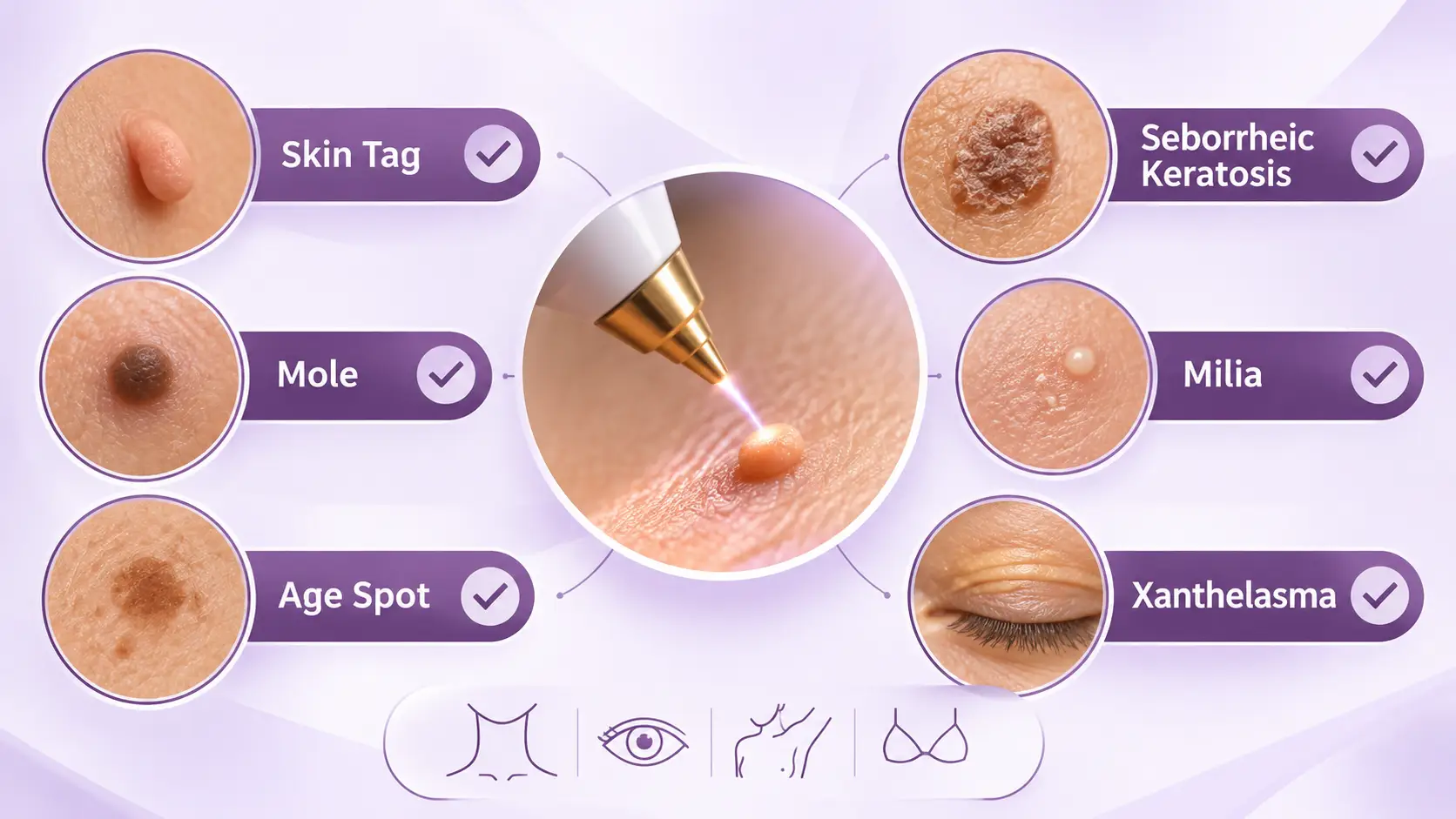
A plasma pen may suit small, harmless spots that sit on the surface of the skin. It doesn't suit every spot, and some spots should never be removed for cosmetic reasons until a clinician knows what they are. Here is how the spots people search for most compare.
Skin tag: a small, soft flap of skin, often on a stalk. A plasma pen may be an option after assessment. Check first? Yes, briefly.
Mole: a brown or skin-coloured spot, flat or raised. A plasma pen is only an option for some harmless moles, after a proper assessment. Check first? Yes, always.
Age or sun spot: a flat brown spot on skin that gets sun. Other options are often discussed. Check first? Yes.
Seborrheic keratosis: a raised, waxy or scaly growth. A plasma pen depends on the assessment. Check first? Yes.
Milia: tiny white bumps, often near the eyes. A plasma pen depends on the assessment. Check first? Usually.
Xanthelasma: soft yellowish patches on the eyelids. Needs a medical check first. Check first? Yes, always.
Plasma Pen Skin Tag Removal
Small skin tags are the most common reason people ask about plasma pens. Tags tend to grow where skin rubs: the neck, underarms, eyelids and under the bra line. They are usually harmless, but they can catch on jewellery or clothing.
The tag's size, where it sits and how wide its base is all affect whether a plasma pen is a good fit. A large tag, a tag with a wide base, or a tag close to the eye may need a different approach.
Best discussed if: the tag is small, hasn't changed, and bothers you physically or cosmetically.
Plasma Pen Mole Removal: Why a Check Comes First
Moles are where getting it wrong costs the most. Most moles are harmless. But melanoma can look like a mole, and heat removes the tissue a lab would need to test.
That is why Allure's own service page says plasma treatment is not a replacement for a diagnosis, a biopsy or medically needed removal.
Unchecked mole + cosmetic removal = a diagnosis that could be missed
Checked, harmless mole + cosmetic removal = an informed choice
Best discussed if: a clinician has already confirmed the mole is harmless and hasn't changed.
Age Spots and Sun Spots
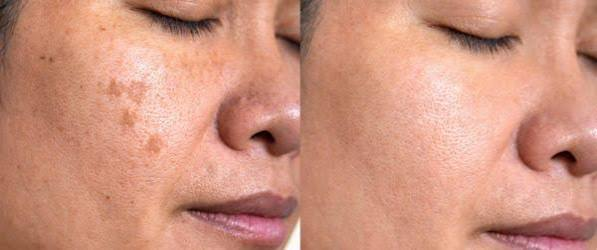
Flat brown spots from years in the sun can be treated in several ways, and a plasma pen is not always the first choice. Late November is a good time to look at them. Summer is over, and spots that darkened in July and August are easier to see.
Options people often ask about for pigmentation include:
IPL photofacial for scattered sun spots
NeoGen PSR for overall tone and texture
Chemical peels for surface pigment and dull skin
A brown spot that looks different from your others, or one that is getting bigger, needs a medical check before any of these.
Best discussed if: your spots appeared or darkened after sun exposure and look similar to each other.
Seborrheic Keratosis and Milia
These two are often mistaken for other spots.
Seborrheic keratosis: The Canadian Cancer Society describes it as a raised growth that looks waxy or scaly. It is common in middle-aged and older adults.
Milia: tiny, firm white bumps, often around the eyes and cheeks.
Both are usually harmless. Still, a seborrheic keratosis can look like other growths, so a clinician should confirm what it is before treatment.
Best discussed if: you have a raised or white spot that has been there a long time and hasn't changed.
Xanthelasma Around the Eyes
Xanthelasma means soft, yellowish patches on or near the eyelids. People often search "can a plasma pen remove xanthelasma" or "does plasma pen work on eyelids." The honest answer: the patch itself may be the smaller question.
A clinical review in StatPearls describes these patches as soft, semisolid, yellow papules or plaques containing cholesterol. The same review notes that xanthelasma palpebrarum has been linked to various medical conditions, such as hyperlipidemia, diabetes, and thyroid dysfunction. It also advises clinicians to screen patients with xanthelasma palpebrarum for underlying lipid disorders, diabetes, and thyroid dysfunction through appropriate laboratory tests.
So the sensible order is:
Step 1: Get a medical check, which may include blood work.
Step 2: Talk about the cosmetic options after that.
A primary care visit, such as Allure's private primary care service, is one place to start.
Source: StatPearls, Xanthelasma Palpebrarum
Best discussed if: you have yellowish eyelid patches and haven't had a recent health check.
Which Spots Should Be Checked Before Any Treatment?
Any spot that is new, changing or unusual should be medically assessed before it is removed for cosmetic reasons. Use this quick checklist before you book anything:
A new spot in adulthood: needs a first assessment so later changes can be tracked.
Changing size, shape or colour: change is the main reason to get a spot checked.
Bleeding without an injury: not typical for a simple skin tag.
Itching or pain: worth having a clinician look at it.
Uneven edges or mixed colours: should be examined before removal.
Looks different from your other spots: often called the "odd one out."
Why does this list matter? A plasma pen can't tell you what a spot is. Only an assessment can.
Pro tip: Before your consultation, take a clear, dated phone photo of the spot next to a ruler, so your clinician can see whether it has changed over time.
Is Plasma Pen Skin Tag Removal Safe and Legal in Canada?
Plasma pen skin tag removal can be done safely in the right hands. Safety depends on the device, the person using it and the assessment beforehand. Canada's rules on these devices have changed over time.
November 26, 2018: Health Canada said plasma pens were not authorized in Canada and may pose health risks.
2019: Health Canada repeated the warning after complaints and seizures of devices at spas.
May 11, 2022: Health Canada said certain plasma pens are now authorized for use by healthcare professionals only.
Source: Health Canada plasma pen advisory
Is a Plasma Pen Legal in Canada?
Yes, for certain devices used by healthcare professionals. Not every pen sold online is one of them. Health Canada sends people to its Medical Devices Active Licence Listing (MDALL) to check whether a device is authorized.
Questions to ask any clinic:
Which plasma device do you use?
Is it listed in Health Canada's MDALL?
Who does the treatment, and what are their credentials?
How do you assess a spot before treating it?
What happens if there is a complication?
A good clinic will answer all five without hesitating.
Can You Do Plasma Pen Skin Tag Removal at Home?
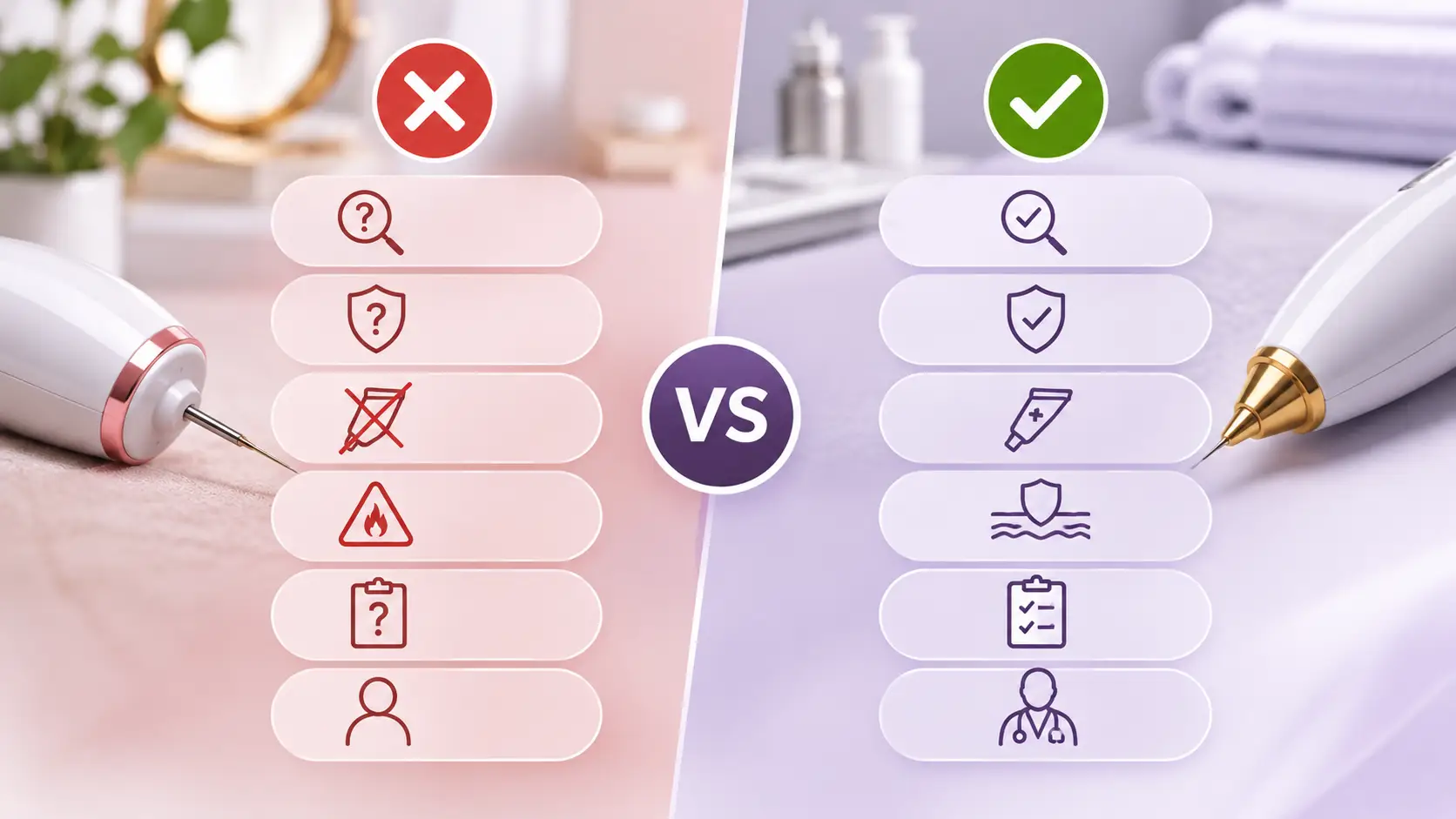
Using a plasma pen at home is not recommended. Health Canada's authorization covers use by healthcare professionals only. Online listings make home removal look quick. The videos don't show the risks.
Identifying the spot: at home, no one checks it. In a clinic, it is assessed before treatment.
Device authorization: often unclear at home. In a clinic, it should be checkable in MDALL.
Numbing: usually none at home. In a clinic, a numbing cream may be used.
Risk of burns and scars: higher without training at home. In a clinic, it is managed through settings and technique.
Aftercare plan: guesswork at home. In a clinic, you get written instructions and follow-up.
If something goes wrong: at home, you deal with it alone. In a clinic, a clinician is available.
Wait, you might be thinking: "Isn't a clinic just a pricier version of the same pen?"
Not quite. The fee covers the assessment, an authorized device, numbing, trained technique and follow-up. The pen is the smallest part of keeping you safe. Skipping the rest is the shortcut that tends to cost more later.
What Happens During Plasma Pen Skin Tag Removal?
A clinic treatment usually follows four short steps, and the appointment often takes less than an hour. Allure's service page says appointments take roughly 20 to 60 minutes, including numbing, depending on the area.
1. Consultation: your clinician reviews the spot, your skin type, medical history, medications and how you heal. Ask: "Is this spot suitable, or should it be checked first?"
2. Preparation: the area is cleaned, and a numbing cream may be applied. Ask: "How long will the numbing take?"
3. Treatment: pinpoint heat is applied to the tag or spot. Ask: "What should I expect to feel?"
4. Aftercare: you get written care instructions and a follow-up time. Ask: "When should I call you?"
What Does It Feel Like?
With a numbing cream, most of the feeling is warmth rather than sharp pain. Each point is very quick. What you may notice:
Warmth or brief heat at each treatment point
A light snapping or clicking sound as the arc touches the skin
A faint smell as the tissue is treated, which is normal
Mild tightness or stinging for a short time afterward
Everyone handles it differently. Thin skin, such as near the eyes, tends to feel more sensitive than the neck or back. If comfort worries you, ask how numbing is done and whether short breaks are possible.
Recovery and Aftercare
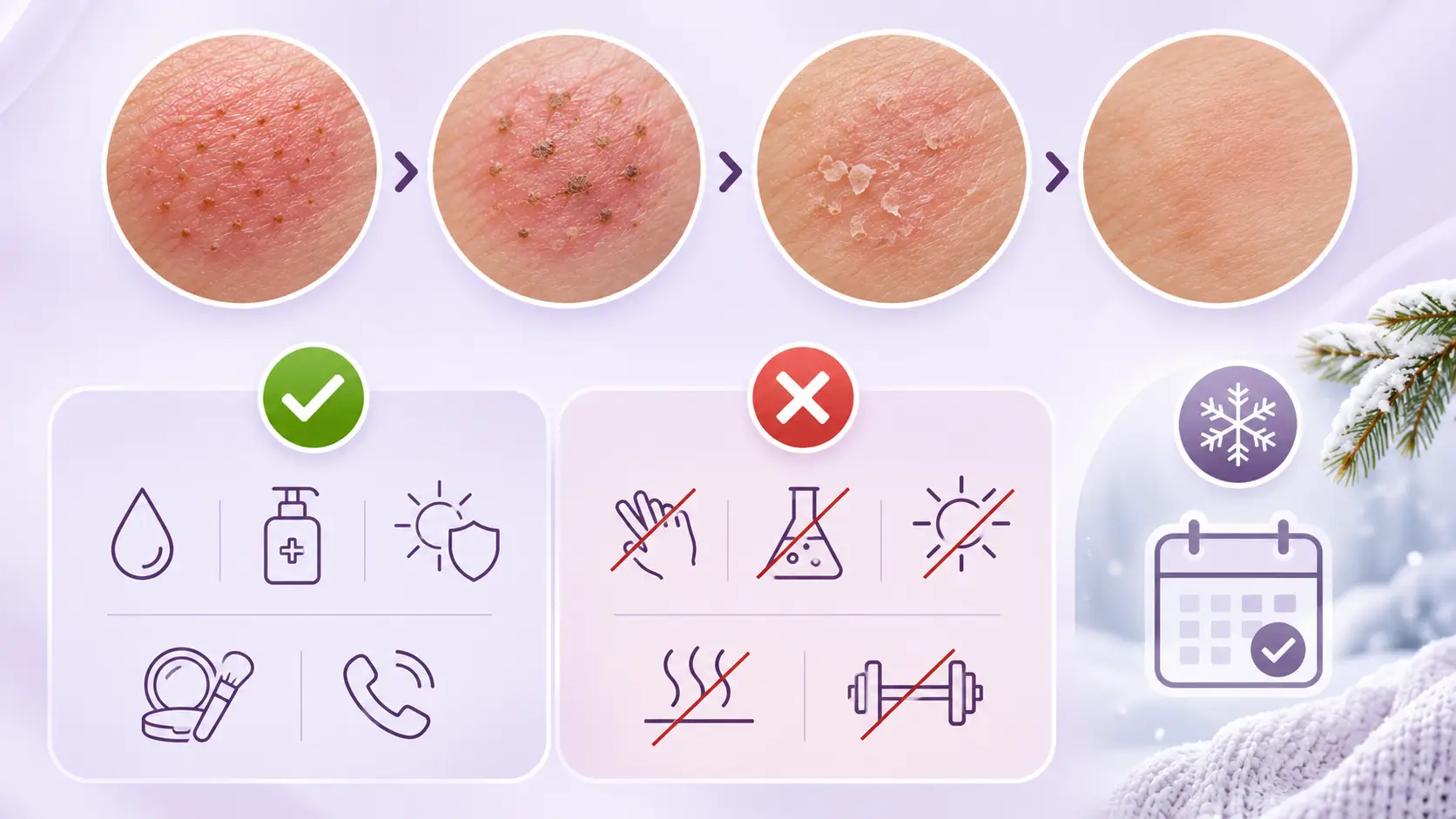
Expect redness, mild swelling and small carbon crusts at each treatment point for several days. Allure's service page says downtime is typically 5 to 7 days. The crust is not a problem. It is part of healing.
Do:
Keep the area clean and dry as instructed
Use the aftercare products recommended to you
Protect the area from the sun
Follow the advice on makeup and exercise
Call the clinic if something worries you
Avoid:
Picking, scratching or rubbing the crusts
Strong active skincare on the treated spot
Tanning or long time in the sun
Heat your provider told you to avoid
Waiting out symptoms that are getting worse
Contact your clinic promptly if you have increasing pain, redness that is spreading, pus-like discharge, fever or blistering.
Seasonal angle: late fall and winter are good months to heal for many people in Grey-Bruce. With less sun, it is easier to keep the area protected.
Pro tip: Book your treatment at least two to three weeks before a holiday event, so the crusts have time to fall off and any pinkness has time to settle.
Once you have healed, ask about medical-grade skincare products that suit your skin type.
Risks and Side Effects
Plasma pen treatment is a cosmetic procedure, and like any procedure, it has risks.
Expected short-term effects:
Redness and warmth
Swelling and tenderness
Crusting at the treatment points
Temporary changes in skin texture
Less common but important risks:
Redness that lasts longer, or slow healing
Infection
Darker or lighter patches of skin (hyperpigmentation or hypopigmentation)
Scarring
A cosmetic result you are not happy with
Who may not be suitable:
People with an active skin infection or open wounds
People who have scarred badly in the past
Anyone with a recent tan or a lot of recent sun
People who are pregnant or breastfeeding
People on certain medications, or with conditions that slow healing
The risk tends to go up when aftercare is skipped, or when the spot was never right for this treatment.
How Much Does Plasma Pen Skin Tag Removal Cost in Canada?
The cost depends on the type of spot, its size, where it is, and how many sessions you need. What affects the price:
Type of spot: one small tag costs differently from several spots.
Location: spots on the eyelids and face may need more time and care.
Sessions: some spots need more than one visit.
Assessment: some spots need a medical check before cosmetic treatment.
As a local example, Allure lists mole removal with plasma at $200 for a 30-minute appointment (pricing as of November 2026). Skin tag pricing is confirmed at the consultation. Current fees for every service are on Allure's treatment pricing page.
What Results Can Realistically Look Like
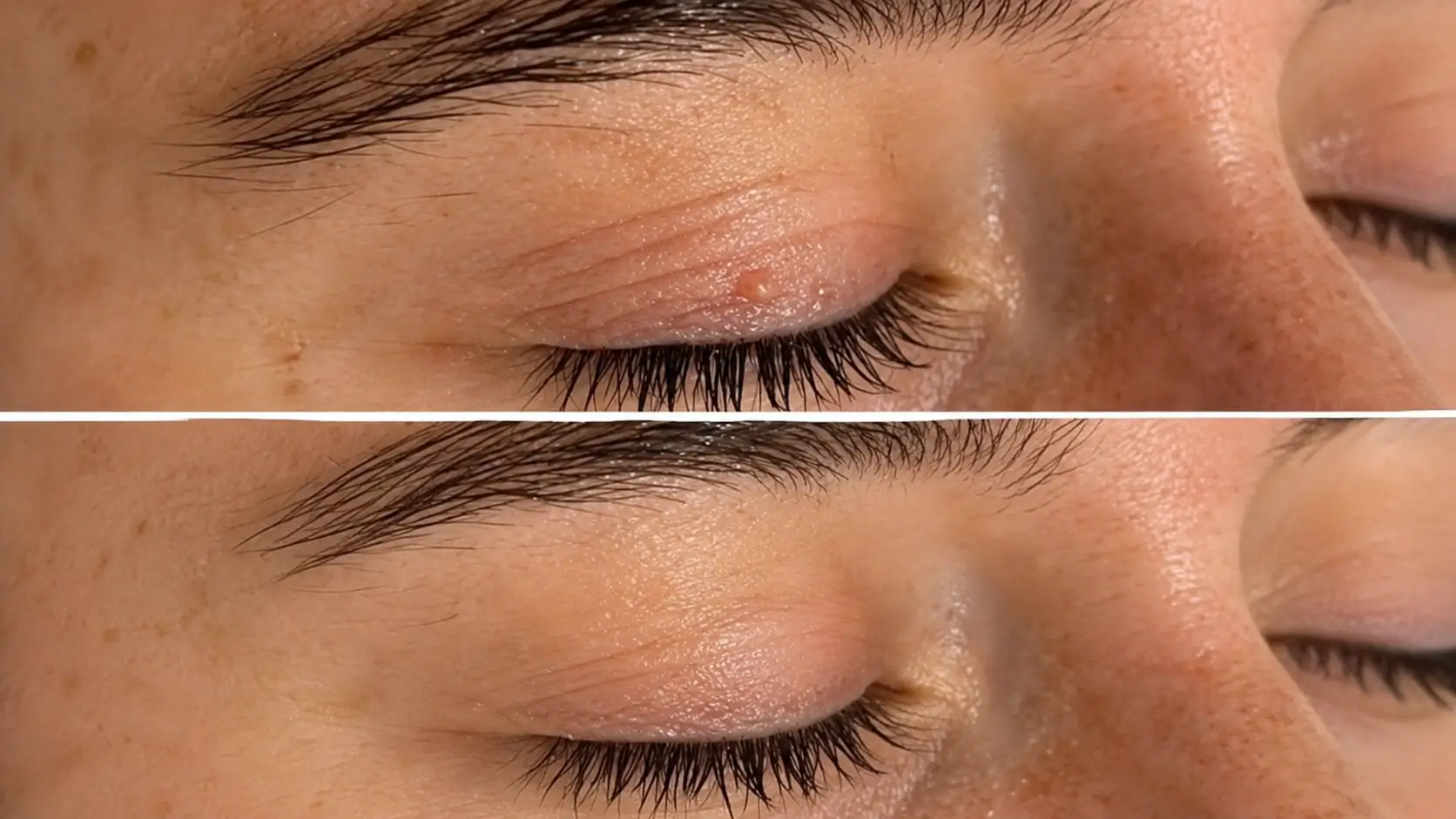
Plasma pen skin tag removal before and after photos can help set expectations. Read them carefully. A realistic outcome often goes like this:
Right after treatment: the tag looks darker and shrunken, with redness around it.
Days 1 to 7: a small crust forms, and then it falls off.
Weeks 2 to 6: the skin underneath may look pink, then slowly blends in.
Later: some spots may need a second session.
When you look at someone else's results, check:
Whether the photos were taken in the same lighting and from the same angle
How long after treatment the "after" photo was taken
Whether the spot looks like yours in size and location
Results vary from person to person, and one person's result doesn't predict yours.
Which Option Fits Your Priority?
What worries you most should shape the question you bring to your consultation.
If you have one small skin tag that hasn't changed, ask about plasma pen skin tag removal at your consultation.
If a mole or dark spot is new or changing, ask about a medical assessment before any cosmetic option.
If you have scattered sun spots after the summer, ask about IPL, NeoGen PSR or a chemical peel.
If you have yellowish patches on your eyelids, ask about a medical check first.
If you can't take much time off, ask which option fits your schedule and how long healing usually takes.
How to Choose Who Treats You
Choose a provider for their clinical safety, not for price or speed. What to look for:
Credentials: treatment by a regulated health professional, such as a nurse practitioner or registered nurse.
Assessment: a real look at the spot, with a referral when needed.
Device: a plasma pen you can look up in Health Canada's MDALL.
Aftercare: clear written instructions and follow-up.
Honesty: a clinic that will tell you "this spot isn't right for this treatment."
That last point is the one to test. A careful clinic doesn't treat every spot it is shown. If a spot is new, changing, bleeding or uneven, you should be referred for a medical assessment instead of being booked for removal. Treat that referral as a good sign about the clinic.
Allure was founded by Lynda Quesnel, NP, who leads a team of registered nurses and certified medical aestheticians. You can read more about the Allure team.
Frequently Asked Questions
1. Can a plasma pen remove skin tags?
A plasma pen may remove small, harmless skin tags. Whether it suits yours depends on the tag's size, base and location. A clinician should confirm what the spot is first.
2. Is plasma pen skin tag removal safe?
It can be, when a trained healthcare professional uses an authorized device after a proper assessment. The risks include redness, crusting, changes in skin colour and, less often, infection or scarring.
3. Plasma pen vs laser pen: which is better for skin tag removal?
They use different energy: a plasma pen uses an electrical arc, and a laser uses light. Many "laser pens" sold online are not medical lasers. The right choice depends on the spot and is decided at a consultation.
4. Does a plasma pen work on age spots, sun spots or xanthelasma?
It depends on the spot. Sun spots often respond to other options, such as IPL or peels. Xanthelasma and dark spots that are changing need a medical check first.
5. How long does skin take to heal after plasma pen skin tag removal?
Redness, swelling and small crusts are normal for several days. Allure's page says downtime is typically 5 to 7 days. Healing depends on the area and how closely you follow the aftercare instructions.
The Bottom Line
A plasma pen can be a practical option for small skin tags and some surface spots. It doesn't replace a diagnosis.
Start with a consultation, and ask about plasma pen skin tag removal if your spot is small, hasn't changed and has already been checked. When you are ready, you can book a plasma treatment consultation or contact the Allure team with your questions.
- #plasma pen skin tag removal
- #plasma pen skin tags
- #plasma pen mole removal
- #plasma pen safety Canada
Ready to talk it through?
Book a consultation with our nurse practitioner–led team, or call us at 519-483-3400.
Keep reading
More from the blog
- PlexR Plasma PenWhat Is Fibroblasting? How Plasma Pen Skin Tightening Works and Where PlexR Fits InFibroblasting uses a plasma pen to tighten mild to moderate loose skin. Learn how it works, healing time, cost and where PlexR fits in.
13 min read
- Lip FillerFiller Dissolver: When and How Hyaluronidase Is Used to Correct FillerA filler dissolver uses hyaluronidase to break down HA filler. See when it's used, side effects, recovery, re-filling and cost in Canada.
10 min read
- Botox, Dysport & XeominMasseter Botox: Jaw Slimming and Clenching Relief ExplainedMasseter Botox relaxes the jaw muscle to ease clenching and soften a square jaw. See results, risks, jowl concerns and Canadian costs.

12 min read